Vajra Position - Adopting the Standing Position of the Blue Three-Pointed Vajra Blazing With Fire
Vajra Position
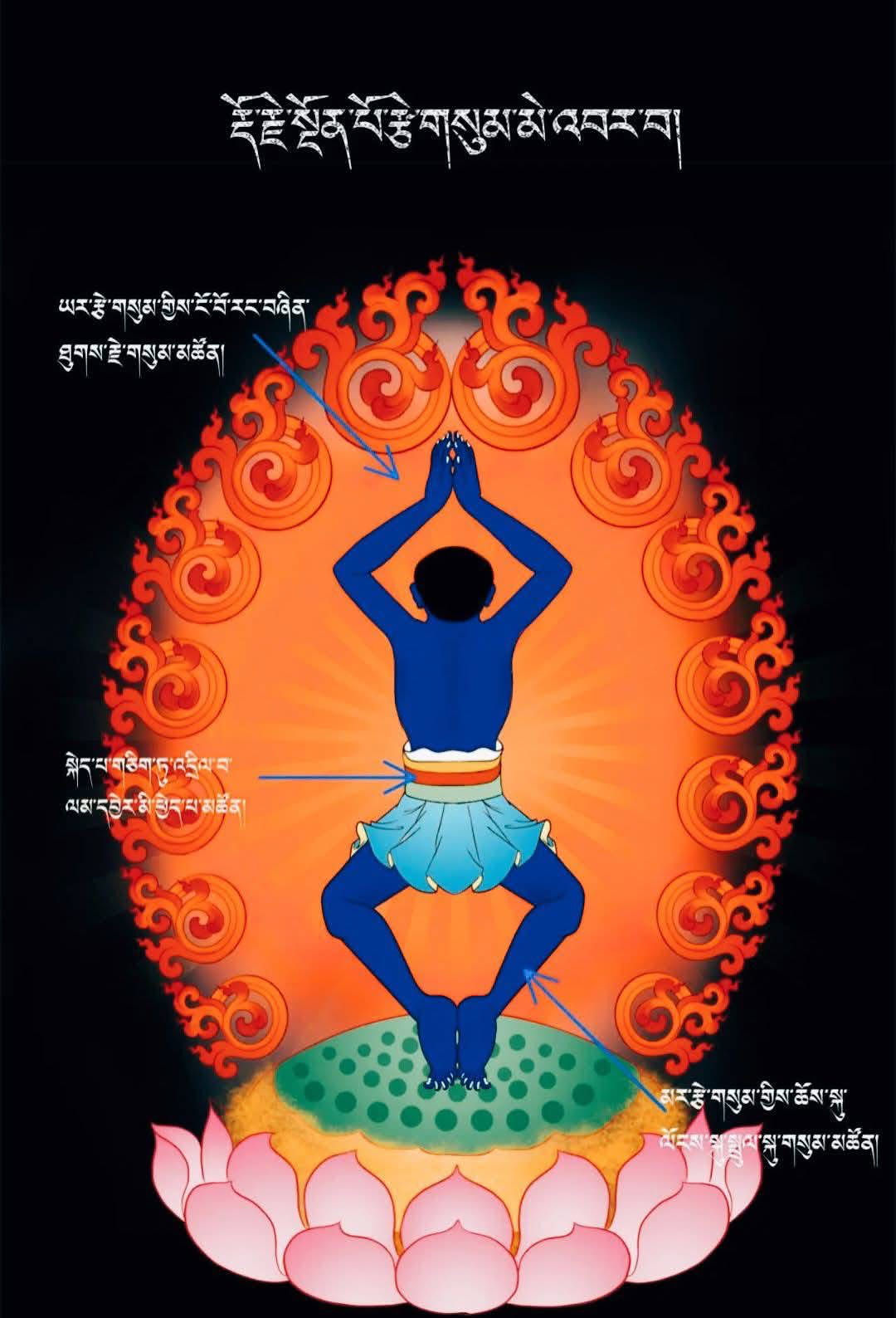
Explanation
The famous so-called vajra position where You remain standing on your toes while unifying the soles of your feet and opening your knees as well as unifying the palms and fingers above one’s head resembles an upper and lower three-poited vajra while your waistline is the central part of the vajra, the adamantine scepter.
The Tibetan inscription explains:
As for the three-pronged blue vajra blazing with fire the three upper prongs represent dzogchen’s essence, nature, and compassion.
At the waistline, at the middle of the vajra, the adamantine position, being integrated into a single point represents the inseparability of the path.
The three lower prongs represent the three kāyas of dharmakāya, saṃbhogakāya, and nirmāṇakāya.
Thus, the upper, middle, and lower part of the body express dzogchen’s fundamental base, it’s path, and it’s fruit (gzhi lam ‘bras bu).
As the base, path and fruition (gzhi lam ‘bras bu gsum) are related to dzogchen’s view, meditation and integration (lta sgom spyos gsum) the reality of the path, the practice of great perfection, cannot exist without the view, which is the ground, and the fruit, i.e. the result.
In this respect Rigdzin Jigme Lingpa says in his famous The Prayer of Ground, Path and Fruition of The Heart Essence of the Vast Expanse (rdzogs chen klong chen snying thig):
One’s essential nature is pristine, unoriginated, and primordially pure.
Whatever manifests is the expression of this unconditioned spontaneous presence.
Without perceiving them as other, realizing the great unity of awareness-emptiness,
One’s understanding of the ground will reach a point of culmination.
May there be no deviations and mistakes concerning this key point of the path!
རང་ངོ་རྣམ་དག་སྐྱེ་མེད་ཀ་དག་ལ༔ ལྷུན་གྲུབ་འདུས་མ་བྱས་པའི་གདངས་ཤར་བ༔ གུད་དུ་མ་བཟུང་རིག་སྟོང་ཟུང་འཇུག་ཆེར༔ རྟོགས་པས་གཞི་ཡི་དགོངས་པ་ཚད་དུ་ཕྱིན༔ ལམ་གྱི་གནད་ལ་གོལ་ཕྱོགས་མེད་པར་ཤོག༔
Audio
Tibetan Inscription
རྡོ་རྗེ་སྔོན་པོ་རྩེ་གསུམ་མེ་འབར་བ།།
ཡར་རྩེ་གསུམ་གྱིས་ངོ་བོ་རང་བཞིན་ཐུགས་རྗེ་གསུམ་མཚོན།
སྐེད་པ་གཅིག་ཏུ་འདྲིལ་བ་ལམ་དབྱེར་མི་བྱེད་པ་མཚོན།
མར་རྩེ་གསུམ་གྱིས་ཆོས་སྐུ་ལོངས་སྐུ་སྤྲུལ་སྐུ་གསུམ་མཚོན།
Source
https://www.lotsawahouse.org/tibetan-masters/jigme-lingpa/prayer-ground-path-and-fruition (commentary https://www.lotsawahouse.org/tibetan-masters/khenpo-yonten-gyatso/ground-path-fruition-commentary)