Tags: Learning
The sixth-fold taxonomy of significant learning by Dr. Fink
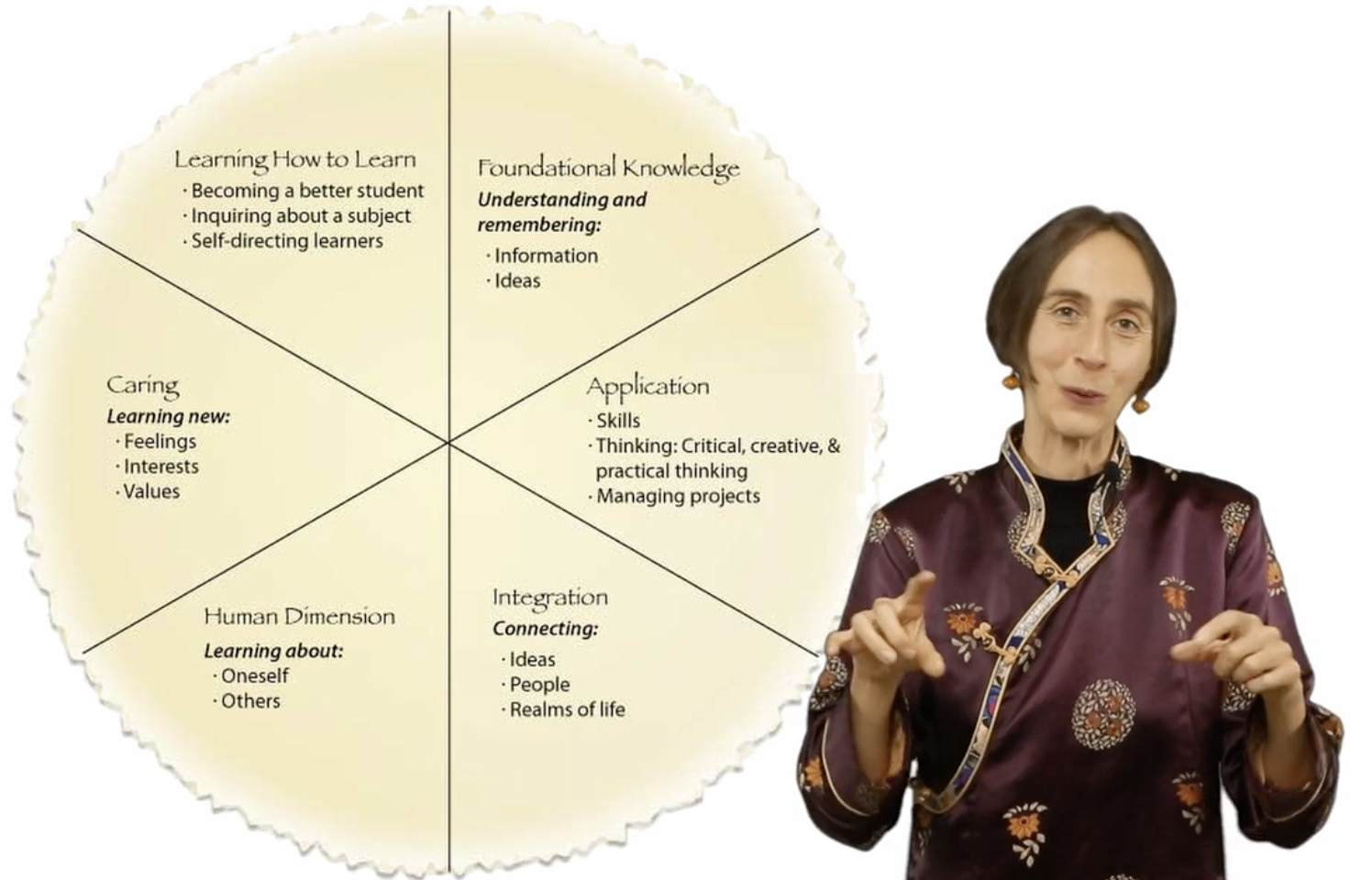
As soon as there is learning, all these dimensions are activated.
Foundational: Basically the ability to retain into memory theoretical or the most basic building blocks.
Application: Using those principles to compose higher structures, identify and know when to use them.
Integration: Who we are now is the result of many previous processes. The learning needs to become a part of our lives, so it shows who we are and why we are.
Caring: How emotions are involved during the learning process. The relationship between ourselves and the subject matter. To observe, be aware i embrace them as part of the process. A negative emotion can hijack the entire learning process and bail out. Transmute the negative emotions into positive through a valid motivation.
Human: Our learning is going to change the way we view ourselves and the way others view us. If the subject matter has not produced any change in how we view ourselves and how we relate with the world around us, then it means we have not yet reached that level of learning.
Metacognition: Regulating, observing and developing the awareness on the progress of those other dimensions. Allows to create a learning environment that suits best our needs and that’s autonomous. Allows to continue the learning if the circumstances change, such as conditions that are unfavourable to keep the Application stage straight-forward.
On the example of riding a bicycle:
Foundational: Using the muscles, muscle memory and learning the signs.
Application: Getting on the bike and riding it, using the gears, and connecting ourselves to the instrument. Without memory you cannot continue into this stage.
Integration: How the bicycle influences the choices like environmental implications, or for health reasons, or to contemplate nice landscapes from home to work.
Caring: Some aspects of the bicycle might arise, like rain falling while using it. Instead of simply complaining or not being aware of the reason that causes discomfort, it’s important to produce the necessary changes to counteract the bad feelings.
Human: More healthy, awake, aware, sporty, seeing how now he is more environmentally concerned. There’s an effect on it, and people around it see that change, they see him more active.
Metacognition: If one gets old, one can change the path or get an motorized bicycle.
On the example of learning Tibetan:
Foundational: Remembering the letters, the shapes, sounds, combinations, etc.
Application: Building sentences, using the words in the context, etc.
Integration: Using it for prayers, Dharma, to explore the culture, etc.
Caring: Maybe a person likes the letters and sounds, but dislikes the grammar. In that case realising the aversion to grammar comes from previous experiences, then being aware of it and seeing the Tibetan grammar can be different and more interesting might be a good antidote.
Human: If one wants to be a Buddhist and use Tibetan to understand better the concepts through meanings of the composing morphemes or gramatical structures that might carry subtleties that color the idea into a different tone.
Metacognition: The Tibetan language affects the thinking and perception by keeping an environment that’s favourable to keep practicing this learning.
Gardner’s Theory of Multiple Intelligences
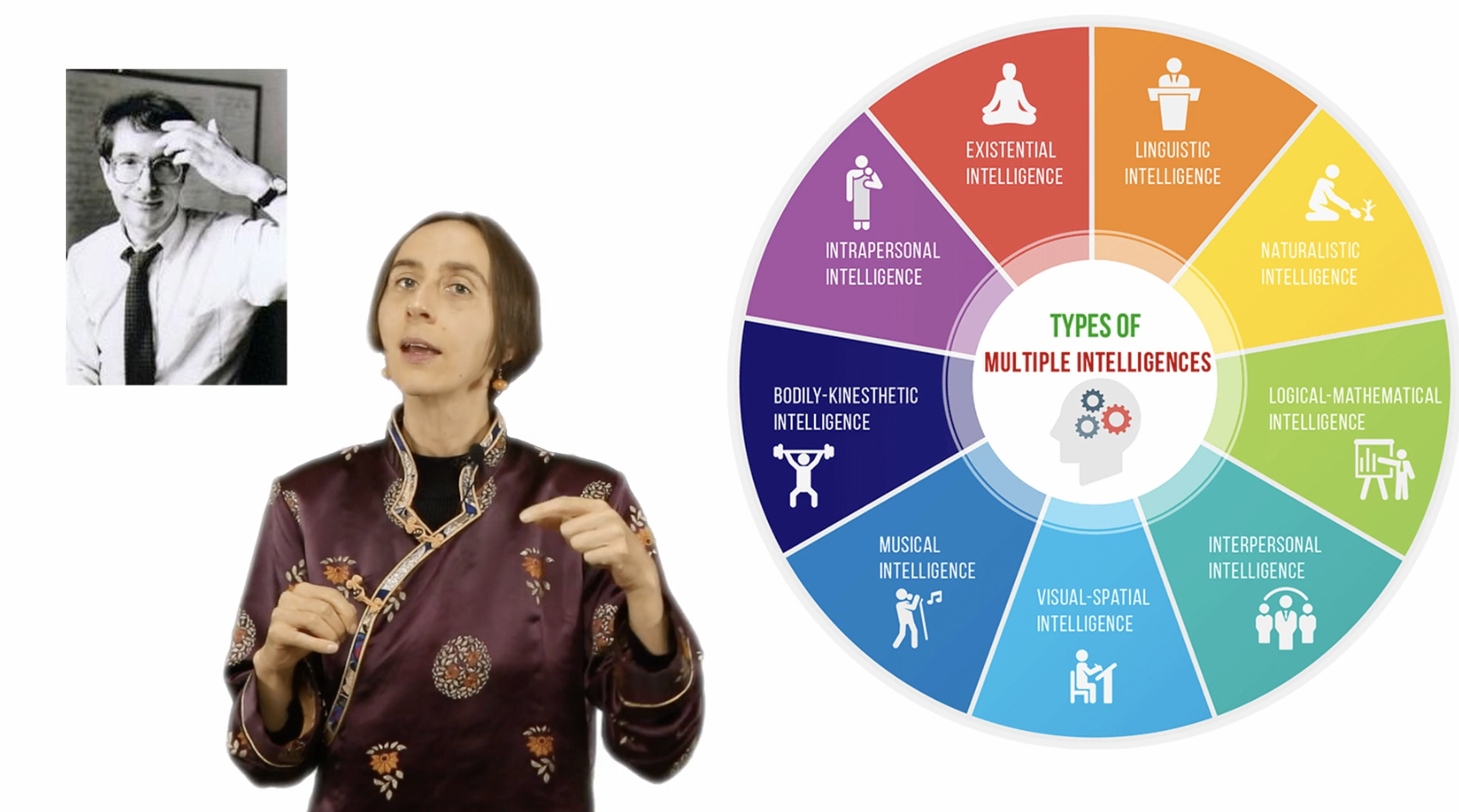
All those are present in all beings, in different degrees.
We tend to feel averted to the areas where are less developed. It’s better to open up and not resist to much to change. If you believe you won’t be learning the thing through X intelligence it will never allow experimenting the fruits that intelligence could produce.
Bodily-Kinaesthetic: Moving body, dancing.
Existential: Spiritual intelligent people tend to take alpha role in groups by helping others. That’s one possibility.
Logical-Mathematical: They get patterns easily.
Linguistic: People who have appretiation for languages it might help with the learning process of Tibetan language itself.
Musical: It’s easy for them to understand sound and its creative applications as well as singing or playing instruments.
Visual-Spatial: They easily grasp the script execution.
Interpersonal: Comunicating with languge tutors, and classmates.
Intrapersonal: Comes useful when developing metacognitive skills.
Naturalistic: Anthropology, how it relates to the environment.